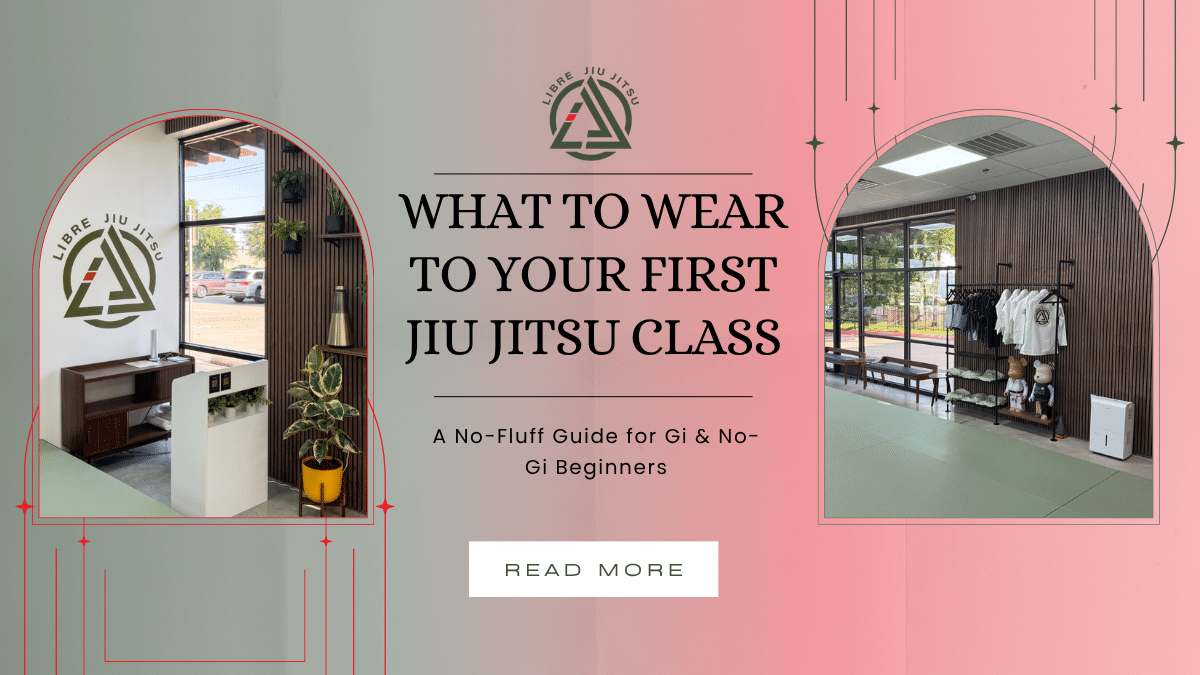
Almost every first-time student asks the same question the night before their first class: “Wait, what am I supposed to wear?” It sounds simple, and it is, but the confusion is understandable. Jiu jitsu has its own uniform, its own rules about what works and what does not, and enough small details (pockets, jewelry, nails, hygiene) that it can feel like you need a manual.
Here is that manual. This guide covers exactly what to wear to jiu jitsu in gi and no-gi classes, what to bring in your bag, what to leave at home, and what women, kids, and adult beginners each need to know before their first session.
If you are somewhere in Farmers Branch, North Dallas, Carrollton, or Addison and thinking about trying a class, the easiest first step is to just come in. Libre Jiu Jitsu is right off I-35E and Valley View Lane, we offer a free trial period for your first week. You can borrow a gi if you need one and figure out the gear question after you have seen if you like the sport.
The Short Answer
You do not need a gi or any specialized gear for your first class. A fitted athletic shirt (or rash guard), athletic shorts without pockets or zippers, a water bottle, and something for your feet off the mat (sandals or flip-flops) is everything you need. Most academies, ours included, can lend you a gi if the class is a gi class. Therefore, there is no need to buy a gi until you have tried a couple of our classes to see if you want to continue learning Jiu Jitsu.
The rest of this article is the long answer, first class experience usually goes smoother when you know all the details.
Do I Need a Gi for My First Class?
No. Not for your first class, and honestly not for your first month.
A jiu jitsu gi for beginners is a real investment (typically eighty to one hundred fifty dollars for a decent one), and there is zero reason to buy one before you know jiu jitsu is for you. Most academies will lend you a loaner gi for a trial class, or let you train in regular athletic clothes for an intro session. If you keep training, you will want your own gi within a few weeks, but that decision comes after you know you like the sport.
Two things worth knowing before you decide:
- Not every class needs a gi: Many academies run both gi classes and no-gi classes. A no-gi class only ever needs athletic clothing, and some people train no-gi exclusively without ever owning a gi.
- The white belt comes with your gi eventually: When you decide to keep training, your academy usually provides your first belt.
Try our Jiu Jitsu class first, everything else will fall into place after.
Gi vs No-Gi: What You Actually Wear
The two main styles of training use different attire. Here is the plain version.
If Your Class Is Gi
A gi (also called a kimono) is the traditional uniform: a heavy cotton jacket, matching pants, and a colored belt.
What you wear:
- The gi itself: Lightweight, pre-shrunk cotton is easiest for beginners. White or blue is the standard starter color. Most academies expect a plain, single-color gi at the beginner level.
- A belt: You start at white belt. Your academy provides the belt when you enroll.
- A rash guard or fitted shirt under the gi top: This is not always required but strongly recommended. It protects your skin from rubbing against the heavy gi fabric, absorbs sweat, and keeps things hygienic.
What you do not wear:
- Anything under the gi with pockets, zippers, or hard fasteners
- A loose shirt that could bunch up under the jacket
If Your Class Is No-Gi
No-gi is exactly what it sounds like. You train in athletic gear instead of the traditional uniform, and the movement is a little faster because there is no fabric to grip.
What you wear:
- A rash guard, either short or long sleeve, that fits snugly against your body. This is the single most important piece of no-gi gear. It protects your skin from mat friction, prevents scratches, and reduces the spread of skin infections.
- Grappling shorts or spats. Grappling shorts are designed for training: no pockets, no zippers, no buttons, and cut to move freely. Spats are compression leggings, sometimes worn under shorts or alone.
What you do not wear:
- Basketball shorts (pockets are a finger-injury hazard)
- Cotton t-shirts (they tear, trap sweat, and offer no protection)
- Anything with metal hardware
If you are training in your own clothes for a first intro session and do not yet own dedicated gear, a fitted athletic shirt (not a loose tee) and athletic shorts without pockets or zippers will get you through the class.
What NOT to Wear
The forbidden list matters as much as the yes list. These are the specific things that either injure someone, damage the mat, or get you asked to change.
- Anything with metal hardware: Zippers, snaps, hooks, and belt buckles scratch mats and partners. This includes jewelry: rings, chains, earrings, watches. Take them off before you step on.
- Loose shorts with pockets: Pockets catch fingers and toes. Broken and jammed fingers from pocket snags are one of the most common preventable injuries in grappling.
- Baggy tank tops: They shift, twist, and get grabbed in ways you do not want.
- Cotton t-shirts: They tear, hold sweat, and provide no protection against friction. Fitted athletic material is the standard.
- Cotton sweatpants: They tear and they are too hot for a real class.
- Shoes on the mat: Never, you will train barefoot on the mat with everyone else.
- Cologne, perfume, or heavy scented lotion: You will be inches from someone’s face for periods of time, it is best to not be heavily scented as some people are sensitive to smells.
If you show up with any of the above, a good academy will kindly redirect you. Just plan around these to respect others on the mat.
What Underwear and Base Layers to Wear
The stuff under your gi or rash guard matters more than beginners expect.
For men: compression shorts or fitted athletic underwear under the gi pants. Loose boxers will shift and bunch during the movements that jiu jitsu asks for. A rash guard under the gi top prevents skin irritation and helps with sweat management.
For women: a sports bra is standard. Under the gi jacket, a rash guard over the sports bra is the most comfortable setup. For no-gi, a rash guard over a sports bra works well. A grappling singlet (rash guard and shorts combined into one piece with a built-in sports bra) is popular because it stays in place through the full range of movement and eliminates the wardrobe adjustments that a two-piece kit sometimes requires. We cover more women-specific gear questions in our women’s jiu jitsu guide, including the honest questions about contact and mat culture.
For kids: athletic underwear or compression shorts under the gi pants, and a fitted athletic shirt or rash guard under the gi top. Nothing loose, nothing with hardware.
What to Bring in Your Bag
Beyond what you wear, a small kit makes your first class much smoother.
The essentials for any first class:
- A water bottle with your name on it, because you will sweat more than you expect
- Sandals or flip-flops (Crocs work) for anywhere you step off the mat, especially the bathroom
- A small towel for after class
- A change of clothes for after training, because you will not want to leave in your soaked gear
Nice to have, not required on day one:
- A mouthguard (not needed for a first drilling session, but useful once you start rolling)
- A gym bag that lets your gear breathe on the way home
Do not bother yet:
- Knee pads (buy after you know if you need them)
- Fancy grip aids, chalk, or supplements
- Multiple gis (one loaner or borrowed gi is fine for day one)
The goal for the first class is simple: show up clean, comfortable, and hydrated. Buy the specialized stuff only after you know what you actually need.
Hygiene: The Real Uniform
The most important part of what you “wear” to a jiu jitsu class is not clothing at all. It is hygiene. Grappling is close contact, and hygiene is a shared safety issue, not a courtesy.
Before you leave the house:
- Shower or arrive clean. Do not show up straight from the gym in sweaty gear.
- Clip your nails short. Fingers and toes both. Long nails are the number one cause of the small scratches that show up on mats. This is the single easiest hygiene fix.
- Take off jewelry. Everything that comes off including rings, chains, earrings, watches and anklets. These are not only a danger to others but they will also damage the mats.
- Tie back long hair. Loose hair gets pulled by accident and it hurts.
- Skip cologne and perfume. You will be inches from partners.
- Cover any open cut with a waterproof bandage.
- Stay home if you are sick or have a skin infection. This is not optional. Coming to class with ringworm or a fresh cold is how outbreaks happen.
Wash your gi and training gear the same day you use it. Damp gear in a closed bag is how bacteria grows and gear breaks down early. Even one wear is enough to justify a wash. This is one of those habits that separates the people who have healthy, long training careers from the people who quit after a skin infection.
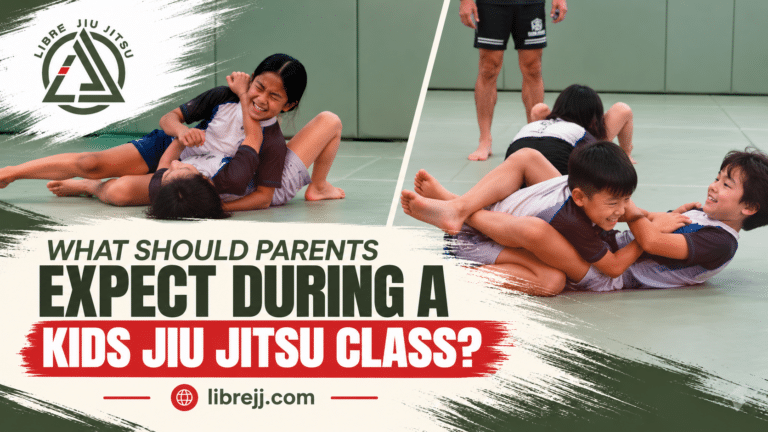
A Note for Kids and Parents
If you are outfitting a child for their first class, the rules are the same as for adults, just scaled down.
- A youth-sized gi for gi classes (most academies can guide you on sizing, and many lend loaner gis for a trial). Whites and blues are standard.
- A fitted athletic shirt or rash guard under the gi top, and athletic shorts or compression shorts under the gi pants.
- For no-gi, a fitted rash guard and grappling shorts (or athletic shorts without pockets).
- Bare feet on the mat, sandals off the mat.
- Nails clipped short, hair tied back, no jewelry.
- A water bottle with their name on it.
If your child is starting brand new, you do not need to invest in premium gear. A basic loaner or entry-level youth gi is fine. Most kids grow through gear so fast that going high-end on day one makes no sense.
Kids often ask nervous questions the morning of their first class (“Will I look weird? What if I do it wrong?”). The right answer is that everyone starts the same way, in similar gear, and nobody notices what a first-timer looks like beyond a friendly hello. If you want more on how the whole first-day experience works, our guide to what to expect at your first class walks through it step by step.
Common First-Class Wardrobe Mistakes
Beginners make some version of these on repeat. You can skip them all:
- Showing up in a loose cotton t-shirt. It rides up, tears, and holds sweat. Fitted athletic top from the start.
- Wearing basketball or gym shorts with pockets. Fingers get caught. Painful, avoidable.
- Leaving jewelry on. You will be asked to take it off, and you may lose small pieces during training if you forget.
- Not cutting nails. You will scratch someone within the first ten minutes. This is genuinely one of the most common day-one complaints.
- Skipping a rash guard under the gi. Your skin will feel it within twenty minutes.
- Bringing brand-new gear that has not been washed. Some fabrics are stiff and irritating out of the packaging. Wash new gear once before wearing.
- Forgetting sandals for off-mat use. You will need to walk to the bathroom, and walking barefoot off the mat then back on is a hygiene issue.
The fix for all of these is the same: use fitted athletic gear you already own for a first class, and buy specialized gear only after you know you are staying.
What Do I Actually Need for BJJ Long Term?
If you decide to keep training, here is the realistic long-term kit list, in the order most people buy things:
- Your first gi (if you train gi), a basic entry model that will last a year of regular use.
- A rash guard for under the gi and for no-gi classes.
- Grappling shorts for no-gi.
- A dedicated pair of training sandals to leave in your gym bag.
- A second gi eventually, because washing turnaround becomes an issue when you train more than twice a week.
- A mouthguard, once you start rolling regularly.
- Spats or compression leggings, especially useful for no-gi and for women.
That is the full list for most training careers. Anything else is extras.
How to Care For Your Gear (So It Lasts)
Buying jiu jitsu gear is one thing. Making it last is another. A few habits keep your gi, rash guards, and shorts in shape for years instead of months.
Washing your gi
- Wash it the same day you wear it. Never leave a damp gi in a bag. Bacteria grows fast and the fabric breaks down.
- Wash in cold water. Hot water shrinks cotton gis significantly, and the shrinkage is not always even.
- Air dry when possible. Tumble drying accelerates shrinkage and wear. Hang your gi if you can.
- Skip the fabric softener. It breaks down the fibers and can leave residues that irritate skin.
- A vinegar rinse now and then helps keep the fabric fresh and controls odor.
- Two gis is a good target once you train more than twice a week, so you always have a clean one ready.
Washing rash guards and shorts
- Cold water, mild detergent, and either air dry or a low tumble.
- Turn them inside out before washing to protect prints and reduce pilling.
- No bleach, no softener.
Bag hygiene
Do not leave wet gear in your gym bag between sessions. A dedicated mesh laundry bag inside your gym bag is a smart move, so gear gets to laundry immediately.
Your First Year of Training Kit, in Order
If you decide to keep training after your first week, here is the realistic order in which most people acquire gear over their first year. There is no rush to buy everything at once.
- Your first gi (if you train gi). Entry-level lightweight gi in white or blue. Around eighty to one hundred fifty dollars.
- A rash guard, for under the gi and for no-gi classes. This is your most-used piece.
- Grappling shorts, for no-gi classes. Pocketless, no zippers.
- Sandals to leave in your bag permanently, so you always have them on hand.
- A second gi, once you train often enough that washing turnaround becomes an issue.
- A mouthguard, once you start regular sparring. Not needed on day one.
- Spats or compression leggings, especially useful for women, for no-gi, and for anyone who wants extra skin coverage.
That is the full working kit for the first year of training. Anything else (specialty gis, competition gear, coaching aids) is optional.
Special Notes: What Not to Buy Yet
New students, in their excitement, often overspend in the first month. Skip these until much later, if at all:
- Competition-grade gis. Save the premium gi for when you actually plan to compete.
- Multiple pairs of grappling shorts. One or two is plenty starting out.
- Instructional videos and online courses. Free content and your coach are more than enough for the first year.
- Knee pads and joint sleeves. Buy only if you develop a specific issue.
The pattern is the same as with most sports: buy the basics, train for a while, and let your own needs tell you what to add.
Try It at Libre Jiu Jitsu in Farmers Branch
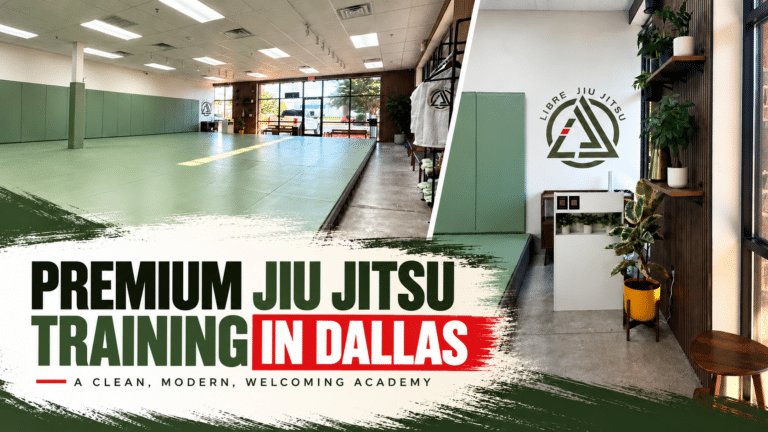
Reading a wardrobe guide is one thing. Actually experiencing your first class in the right gear is another. We built our classes and culture to make a first visit easy: friendly welcome, a coach who introduces you around, a room where nobody cares if you show up in athletic shorts on day one, and a loaner gi if you need one for a gi class.
For folks across Farmers Branch, North Dallas, Carrollton, and Addison, the practical details:
- We are easy to reach and easy to park at, at 13150 Senlac Drive, Farmers Branch, TX 75234, right off I-35E and Valley View Lane.
- We run adult BJJ classes in both gi and no-gi formats, plus kids and women’s classes, all beginner-friendly.
- The culture is friendly, ego-free, and used to first-timers.
- You can check our weekly class times before you come.
The easiest way to try it is with zero cost and zero pressure. We offer a free trial week for new students (a real free trial BJJ Dallas locals can book with no commitment), or call 972-587-0488. When you keep going, our flexible BJJ memberships include monthly, three-month, and six month plans.
Wear the athletic gear you already own, bring a water bottle, and come in. Book your free week of classes at Libre Jiu Jitsu.
Frequently Asked Questions
What do I wear to my first jiu jitsu class if I do not own a gi?
A fitted athletic shirt or rash guard and athletic shorts without pockets, zippers, or metal buttons. Most academies can lend you a gi for a gi class, or let you train in athletic clothing for an intro session.
Do I need any special equipment for my first BJJ class?
No. A fitted top, athletic shorts, a water bottle, and sandals for off-mat use is everything you need on day one. Buy specialized gear only after you know you are staying.
What should women wear to a jiu jitsu class?
A sports bra, a rash guard over it, and athletic shorts or leggings without pockets or zippers under the gi pants (or on their own for no-gi). Many women prefer a grappling singlet that combines a rash guard and shorts with a built-in sports bra, because it stays in place through the full range of movement.
What should kids wear to their first class?
A youth-sized gi (many academies lend loaner gis for a trial), a fitted shirt or rash guard under the gi top, and athletic shorts or compression shorts under the gi pants. Bare feet on the mat, sandals off the mat.
Can I wear regular gym clothes to no-gi jiu jitsu?
Skip anything with pockets, zippers, or loose material. A fitted rash guard and pocketless grappling shorts (or plain athletic shorts without pockets) are the standard.
How do I try a BJJ class in Farmers Branch?
Libre Jiu Jitsu offers a free trial week. Reach out through Libre Jiu Jitsu or call 972-587-0488 to set it up. Arrive about fifteen minutes early on your chosen day.