Summer in North Texas is long, and it is hot. School is out for weeks, the screens come out, and a lot of parents in Farmers Branch spend June through August trying to keep their kids active, engaged, and out of a daily loop of tablets and air conditioning. The traditional options (a packed full-day camp, a sports league, a rec program) all have their place, but they do not fit every family, and they do not always give kids something that sticks past Labor Day.
There is an option a lot of local parents overlook: Brazilian Jiu Jitsu. It is active, it is indoors and air-conditioned (which matters a great deal in a Texas summer), it is screen-free by nature, and the things it builds (confidence, discipline, focus, real friendships) do not pack up and disappear when summer ends. Kids genuinely love it, and the reasons they love it are exactly the reasons it is good for them.
This guide breaks down summer activities for kids in Farmers Branch through that lens: why jiu jitsu works so well as a warm-weather activity, why kids get hooked on it, how it compares to traditional summer programming, and how a family can fit it into a busy summer schedule. If you have searched BJJ near me or Farmers Branch martial arts looking for a summer activity that lasts, the easiest first step is a no-pressure free trial week. Libre Jiu Jitsu is located right off I-35E and Valley View Lane, easy to reach from anywhere in North Dallas, Carrollton, and Addison.
The Summer Problem Every Local Parent Knows
When the Carrollton-Farmers Branch school calendar runs out and summer break begins, the same challenge lands on most households. The structure that school provided disappears overnight, and parents are left to rebuild it. The realistic options around town fall into a few buckets:
- Full-day day camps that run a fixed schedule, often require committing to full weeks at a time, and can be expensive when you add up the weeks.
- Sports leagues and outdoor programs that are great for kids who love a specific sport, but mostly seasonal, and brutal in July heat.
- City recreation and parks programs that offer real value but tend to fill up early and run on set calendars.
- The default fallback, which is a lot of unstructured time at home, which usually means a lot of screen time.
None of these are bad. But many parents want something that keeps a child active in the worst of the heat, does not demand a rigid all-or-nothing schedule, and gives the child something they can carry forward into the school year and beyond. That’s exactly the gap a good martial arts program fills.
Why Jiu Jitsu Is Built for a Texas Summer
A few practical features make grappling an unusually good fit for the hottest months in North Dallas.
It Is Indoors and Air-Conditioned
This is not a minor point in a region where summer afternoons regularly climb into the high 90s and beyond. Outdoor camps and sports often have to cut activity short or move kids inside on the worst days. A jiu jitsu academy gives your child a full, hard, active hour, every day, regardless of what the thermometer says outside. The activity does not depend on the weather cooperating.
It Burns Real Energy
Jiu Jitsu is a genuine physical workout. A child spends the class moving, drilling, problem-solving with a partner, and rolling under supervision. They come home tired in the good way, the way that leads to better sleep and a calmer evening, rather than the wired, restless energy that builds up on a screen-heavy day.
It Is Screen-Free by Design
There is no version of jiu jitsu that happens on a tablet. The entire activity is physical, social, and present. For families trying to reclaim some balance from summer screen time, an activity that simply cannot be done on a phone is a relief.
It Is Flexible Around Real Family Schedules
Unlike a full-day camp that demands you commit to specific weeks, an ongoing class schedule lets families train around vacations, visiting grandparents, and the unpredictable rhythm of summer. You are not locking into a fixed block. Your child trains on the days that work, and the progress carries over week to week.
Why Kids Actually Love It (The Real Reasons)
Adults think about benefits. Kids think about whether something is fun. The reason jiu jitsu works as a summer activity is that kids genuinely enjoy it, and here is what hooks them.
Learning Through Play
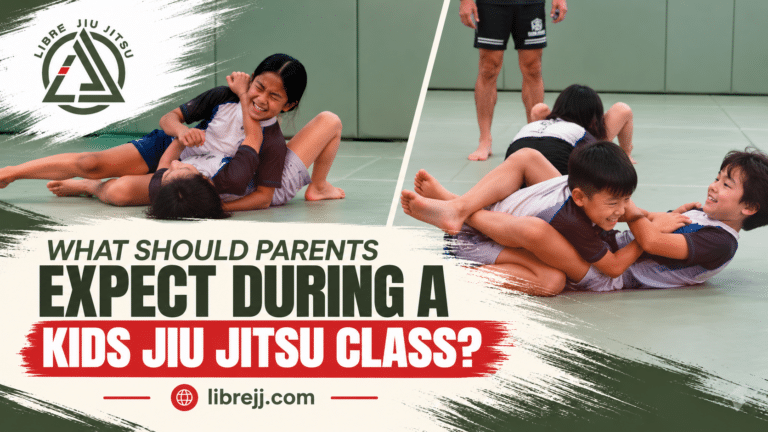
Especially for younger kids, a good class feels like a series of games. Coaches teach real movement and technique through play: crawling drills, tag-style games, partner challenges, and movements that feel like an adventure on the mat. Kids are learning the whole time, but to them it feels like recess with a purpose.
The Thrill of Leveling Up
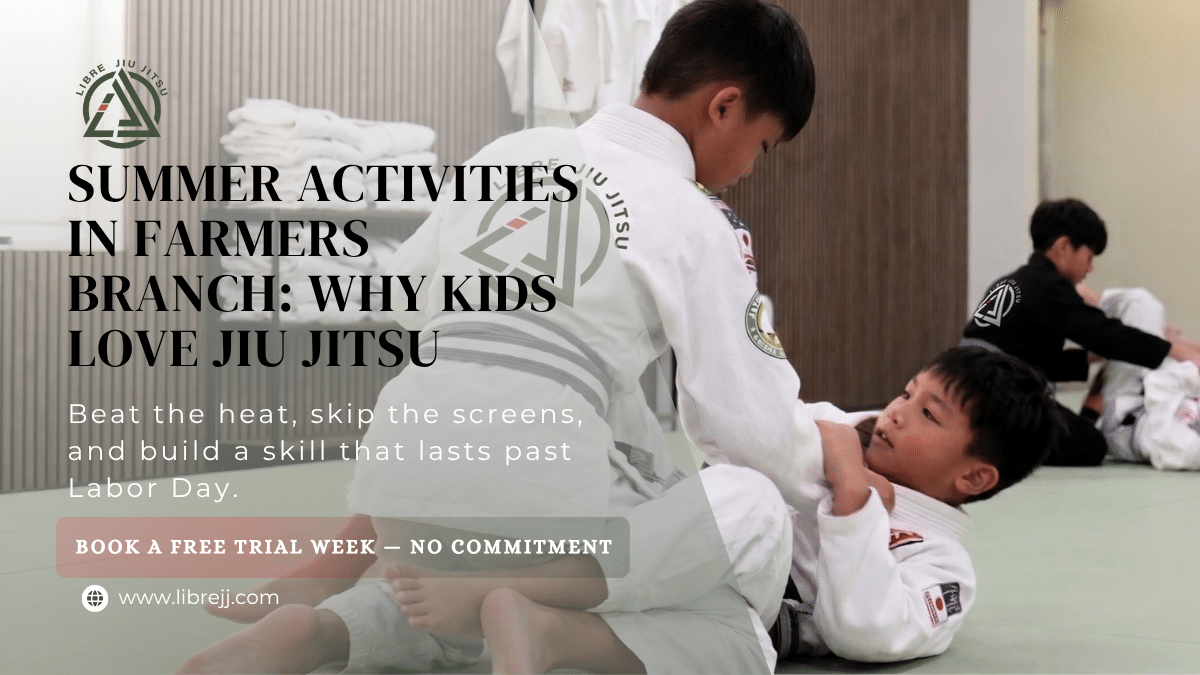
Jiu Jitsu has a built-in progress system that is practically designed for how kids’ brains work. They earn stripes on their belt, and eventually new belt colors, as they improve. Each stripe is a visible, tangible reward for showing up and getting better. It is the same satisfaction kids get from leveling up in a game, except it is real, it is earned through effort, and it builds a lasting habit of working toward a goal. That sense of “powering up” keeps them motivated through the whole summer.
The Mat Family
Kids make friends fast on the mat, and the friendships run deep because they are built on trust and shared effort. Training partners become a “mat family,” a group of kids who encourage each other, celebrate each other’s progress, and look forward to seeing one another. For a child who might otherwise spend summer feeling a little isolated, that built-in social circle is a real gift, and it is one of the top reasons kids ask to come back.
Feeling Strong and Capable
There is a specific kind of joy a kid feels when they realize their body can do something it could not do last week, when a move finally clicks, when they escape a position, when they hold their own with a bigger partner. That feeling of growing physical competence is deeply satisfying for a child, and it feeds directly into their confidence off the mat.
Coaches Who Make It Fun and Safe
Kids love adults who take them seriously, keep the energy high, and keep the room safe. A good kids coach is part teacher, part hype-person, and part referee, and that combination is exactly what makes a child want to come back tomorrow.
What Your Child Gains That Outlasts the Summer
The best argument for jiu jitsu over a one-off summer camp is simple: the benefits do not expire in August. They follow your child into the school year.
Confidence and Resilience
A child who trains learns to be in a tough spot, stay calm, and work their way out. They learn that struggling at something and then improving is normal and rewarding. That resilience shows up in the classroom, in friendships, and in how they handle frustration. The quiet confidence of a kid who knows they can handle themselves is one of the most valuable things a parent can give them, and unlike a summer tan, it lasts.
Discipline and Focus
A structured class asks a child to listen, follow instructions, wait their turn, and control their body. Practiced a few times a week through the summer, those habits become second nature, and many parents notice the difference when school starts back up: better focus, more patience, and a smoother transition back into routine.
Real Self-Defense and Anti-Bullying Skills
Because jiu jitsu is the art of controlling close-range physical situations without throwing a punch, it gives kids a genuine, practical way to protect themselves if they ever need it, which is why many parents researching self-defense in Dallas for their children start here. Just as important, the confident posture that comes from training tends to keep kids from being targeted in the first place. It is one of the most common reasons parents start their kids in the first place, and summer is a natural time to begin.
Physical Literacy and Better Sleep
Kids learn to fall safely, move efficiently, and use their bodies well, which reduces injury risk in every other activity they do. And a child who burns real energy in a hard class sleeps better, which any parent of a summer-restless kid will appreciate.
A Reason to Keep Going
This is the quiet superpower of choosing jiu jitsu for summer. A traditional camp ends, and that is it. A jiu jitsu habit started in June is a habit your child can carry through the fall, the winter, and for years. Many lifelong practitioners started with a single summer trying it out. Summer is just how it starts.
Jiu Jitsu vs the Traditional Summer Camp: An Honest Comparison
To be fair, every option has tradeoffs. Here is a straight comparison so you can decide what fits your family.
- Schedule: Ongoing jiu jitsu classes are flexible, so you train on the days that work, while a traditional full-day camp usually means fixed full weeks.
- Heat: Classes are indoor and air-conditioned, where camps are often outdoor and heat-dependent.
- Skill that lasts: Jiu jitsu builds a skill and a habit for years, where a camp simply ends when the week is up.
- Screen time: Classes are fully physical and social with no screens, while screen time at a camp varies by program.
- Social bonds: Jiu jitsu builds a consistent “mat family” over time, rather than a new group each session.
- Physical activity: It stays high in every class, where a camp can vary widely.
- Confidence and discipline: These are a core focus of the training, not an occasional side effect that depends on the program.
A full-day camp solves a childcare-hours problem that a one-hour class does not, and that is a real consideration for working parents who need all-day coverage. Many families use both: a camp or care arrangement for the daytime hours, and jiu jitsu a few evenings or mornings a week for the activity, the skill, and the fun. The point is not that one replaces everything. It is that jiu jitsu adds something the others usually cannot: a lasting skill and a habit your child carries forward.
How to Fit It Into a Busy Summer
You do not need to overhaul your whole summer to add jiu jitsu. A realistic approach for most families looks like this:
- Start with a free trial, so your child can see if they enjoy it before you commit to anything.
- Aim for two to three classes a week, which is enough to build real skill and a real habit over a summer without overloading the calendar.
- Build it around your existing plans, training on the days you are in town and simply picking back up after a vacation week. The progress carries over.
- Let the belt and stripe system do the motivating. Kids who can see themselves improving tend to ask to go, which makes the parent’s job easier.
By the time school starts, a child who began in early summer can have a couple of months of training, a few stripes, a group of friends, and a habit worth keeping.
Jiu Jitsu vs Other Martial Arts for Summer
Parents weighing a summer martial arts activity often look at karate, taekwondo, and similar striking arts too. All of them can be excellent, and the right fit depends on your child. Here is how grappling compares, so you can choose with clear eyes.
Striking arts (karate, taekwondo, kickboxing) teach punches and kicks, often with a heavier emphasis on forms, patterns, and board-breaking style demonstrations. They build coordination, discipline, and confidence, and many kids love them.
Brazilian Jiu Jitsu differs in a few ways that matter for some families:
- No strikes. Because there is no punching or kicking, the concussion and impact risk that worries some parents is largely removed.
- Built around real, resisting practice. Kids spend a lot of time applying technique against a partner who is actively (and safely) resisting, which is why the self-defense skill holds up under pressure.
- Leverage over size. A smaller child learns to control a larger one through technique, which is empowering and practical, especially for kids worried about bullying.
- Ground-focused and close-range. Most real schoolyard scuffles end up close-range and on the ground, which is exactly the range jiu jitsu specializes in.
None of this makes other martial arts “wrong.” It simply means that if your priorities are low impact, realistic self-defense, and a sport a smaller child can excel at, grappling is an especially strong summer choice.
What a Summer of Training Actually Looks Like
It helps to picture the arc, so you know what your child is signing up for over a few months.
- Early summer (the first few weeks): Your child learns the basics of moving on the mat, the etiquette of the room, and a handful of fundamental positions. The biggest wins here are comfort and confidence. They stop feeling like a stranger and start feeling like part of the group.
- Mid summer: Techniques begin to connect. Your child recognizes positions, remembers escapes, and starts holding their own in light, controlled practice. This is usually when the friendships solidify and when many kids earn their first stripe, which is a huge motivation boost.
- Late summer (heading back to school): Your child has a couple of months of training behind them, a few stripes on the belt, a group of friends, and noticeably more confidence and focus. The habit is established, and continuing into the fall feels natural rather than like starting over.
That progression is the whole argument for choosing an ongoing activity over a one-off camp. By the time school starts, your child has not just filled the summer. They have built something worth keeping.
Helping a Nervous Kid Through the First Class
Some kids bounce onto the mat without a second thought. Others are shy, especially walking into a brand new room full of strangers. If your child is the cautious type, a few simple things make the first class go smoothly.
- Tell the coach in advance that your child is nervous. A good kids coach will pair them with a friendly partner and ease them in.
- Stay and watch the first class. Knowing you are right there on the sideline is reassuring for a younger child.
- Keep your own energy calm and positive. Kids read their parents closely. If you treat it as a fun adventure, they are more likely to as well.
- Do not over-promise or over-pressure. “Let us just try it and see if it is fun” takes the pressure off far better than “you are going to love this and do it all summer.”
- Let the free trial do its job. There is no commitment, so your child can try a class (or a few) and decide with you whether it is a fit.
Most nervous kids warm up faster than their parents expect, often within a single class, once they realize the room is friendly and the games are fun.
Try It at Libre Jiu Jitsu in Farmers Branch
We built our kids jiu jitsu classes to be exactly the kind of summer activity that is fun enough that kids ask to come back and structured enough that parents see real growth. Classes are grouped by age, the coaching keeps safety and supervision front and center, and the energy is high because that is what makes a kid fall in love with the mat.
For families across Farmers Branch, North Dallas, Carrollton, and Addison, the practical details:
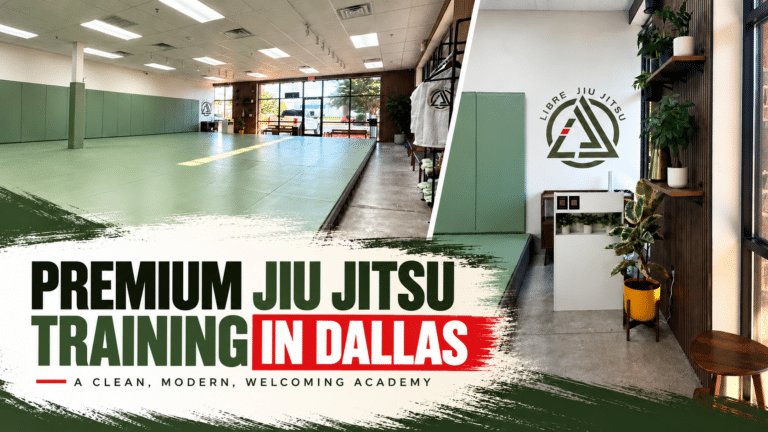
- We are easy to reach and easy to park at, located right off I-35E and Valley View Lane, a short drive from anywhere in the area.
- Classes are indoor and air-conditioned, so the heat never cancels a session.
- Kids train with peers their own age in a supervised, supportive room.
- You can check our weekly kids class times.
The easiest way to find out whether your child will love it is to let them try it with no cost and no pressure. We offer a free trial week for new students (a real free trial BJJ Dallas families can book with no commitment). When you decide to keep your child training through the fall and beyond, our flexible BJJ memberships include monthly, three-month, six-month, and yearly plans.
Give your child a summer that does more than fill the calendar. Book a free trial week of kids classes at Libre Jiu Jitsu and watch them find something they actually want to stick with.
Frequently Asked Questions
Is jiu jitsu a good summer activity for kids in Farmers Branch?
Yes. It’s indoor and air-conditioned (a must in Texas heat), fully active and screen-free, flexible schedules that work around vacations, and builds confidence and discipline that last well past summer.
How is it different from a regular summer camp?
A camp ends in a week or two; jiu jitsu builds an ongoing skill and habit your child can keep for years. Classes are also flexible rather than fixed full-day blocks, though many families pair daytime childcare with a few jiu jitsu classes a week.
What age can my child start?
Many kids start around age five, though readiness matters more than the exact number. If your child can follow a simple instruction, share space, and take turns, they are likely ready.
How many days a week should my child train over the summer?
Two to three classes a week is plenty to build real skill and a real habit over a summer without crowding the calendar.
Will my child stay interested all summer?
Most do, because the belt and stripe progression gives them a visible reward for showing up, and the “mat family” of friends keeps them looking forward to class.
How do I sign my child up in Farmers Branch?
Libre Jiu Jitsu offers a free trial week. Reach out through Libre Jiu Jitsu to set it up, and you are welcome to watch the class.